
Introduction
Commercial trees add shade, curb appeal, and long-term value to business campuses, retail centers, and multi-family communities. But on commercial properties in Holly Springs, NC, there are times when tree removal is the safest and most responsible option. This article helps property managers, facility teams, and asset owners understand when removal is appropriate, how professionals evaluate risk, and what a properly planned removal includes.
When tree removal becomes the safest choice
Removing a tree is a significant decision for commercial properties. Consider removal when one or more of these conditions exist:
- Advanced structural failure: Large splits, cracked trunks, or multiple major trunk failures that indicate imminent collapse.
- Root failure or undermining: Roots heaved from construction, severe root rot, or pavement/utility damage that compromises stability.
- Irreversible pest or disease damage: Widespread decay or pathogens that cannot be controlled and present a safety threat to buildings, pedestrians, or vehicles.
- Storm damage beyond repair: Trees badly fractured by wind, ice, or lightning where pruning cannot restore safe structure.
- Clear hazards to people or assets: Leaning trees over high-traffic walkways, play areas, or loading zones where failure would cause injury or large property damage.
- Interference with infrastructure or planned construction: Roots or canopy causing chronic damage to sidewalks, curbs, utilities, or preventing site renovation where retention isn’t viable.
How commercial crews assess risk
Experienced commercial landscapers and arborists perform a methodical assessment before recommending removal. Key steps include:
- Visual inspection: Evaluate trunk integrity, crown condition, evidence of decay, cankers, cavities, and pest activity.
- Root zone review: Look for heaving, exposed roots, soil compaction, and signs that roots no longer anchor the tree effectively.
- Site context: Determine potential targets under the tree—buildings, vehicles, pedestrian routes, or critical equipment.
- History and site use: Consider recent storms, construction, or changes in site drainage that might affect stability.
- Cost-benefit of alternatives: Compare pruning, cabling, or monitoring versus full removal when safety is marginal.
Permits, ordinances, and local guidance
Many municipalities, including those around Raleigh and Holly Springs, maintain tree ordinances or require permits for removing certain trees—especially specimen trees or those in protected buffers. Property managers should:
- Check local rules and permit requirements with the Town of Holly Springs planning or arboriculture office.
- Document the professional assessment and reasons for removal to support permit applications.
- Coordinate with tenant and building operations teams to plan closures, parking changes, or traffic control.
What to expect during a professional commercial tree removal
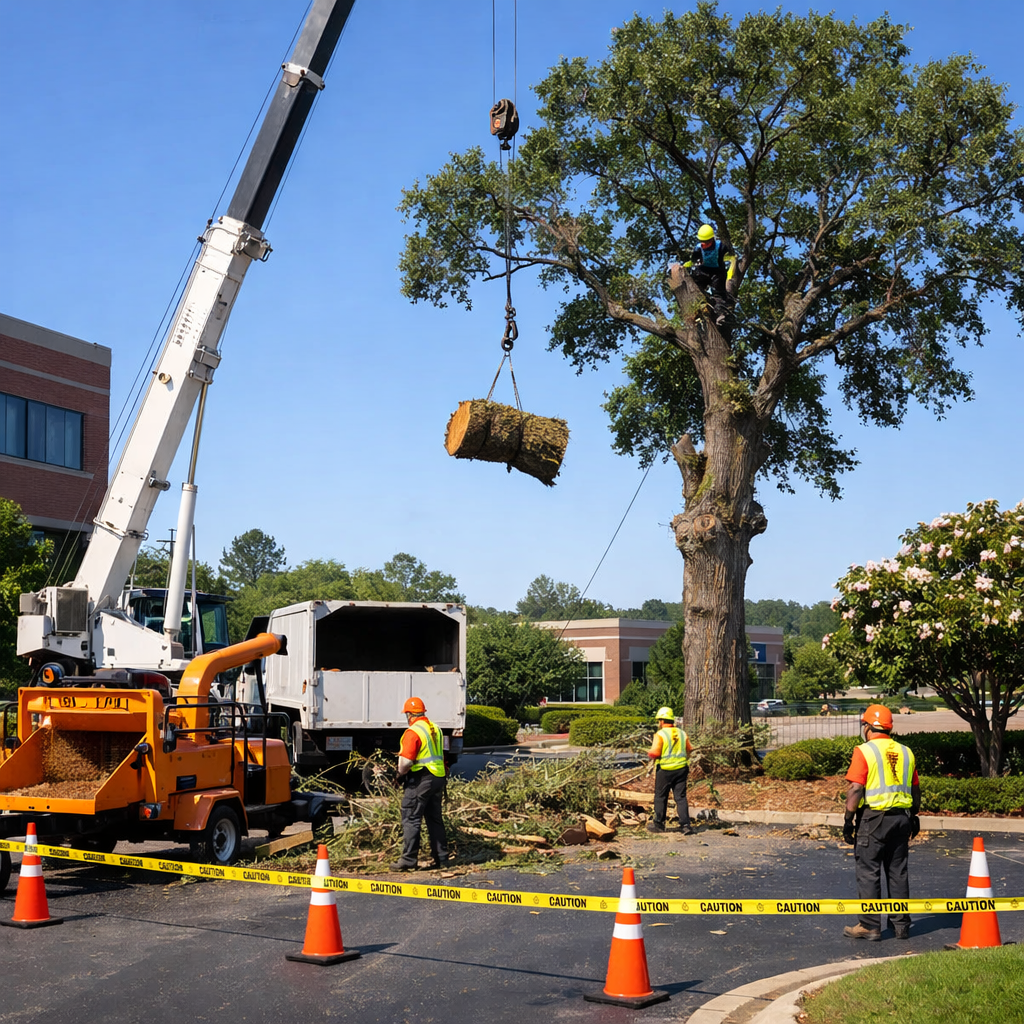
A properly executed removal on a commercial property focuses on safety, minimal disruption, and cleanup:
- Site safety plan: Barricades, signage, and traffic control to protect pedestrians and vehicles.
- Proper equipment: Rigging, cranes, chippers, and stump grinders when needed to remove large trees safely in tight or high-traffic areas.
- Experienced crews: Trained personnel who follow safety protocols and limit disruption to tenants and operations.
- Debris handling: Wood chipping, hauling away material, or recycling into mulch—sustainable disposal options reduce waste.
- Stump management: Options include grinding to below-grade or full stump removal if required for future construction or planting.
- Site restoration: Soil grading, mulch, and recommendations for replacement plantings that suit commercial settings while supporting long-term property value.
Alternatives to removal—when they make sense
Removal is not always the first option. On commercial sites, acceptable alternatives include:
- Targeted pruning: To remove hazardous limbs and improve structure without removing the entire tree.
- Cabling and bracing: To stabilize multi-trunk or split trees as a temporary or long-term measure.
- Regular monitoring: Scheduled inspections when risk is low but not negligible.
However, when risk to people or critical assets is high, removal is the only responsible choice.
Why hire a commercial-focused team
Commercial properties have unique needs: tight schedules, liability concerns, tenant coordination, and larger landscapes. Paradise Property Services brings more than 25 years of experience serving commercial clients in the Raleigh region, including careful scheduling, safety-focused operations, and sustainable disposal practices. Working with a commercial provider helps ensure minimal service disruption and clear communication across property teams.
Next steps for property managers in Holly Springs
If you notice structural defects, active decay, severe lean, or a tree that endangers people or assets on your commercial property, take these steps:
- Secure the area and limit access near the tree.
- Arrange a professional risk assessment from a commercial tree services provider.
- Confirm any local permit needs with Holly Springs planning staff.
- Plan removal with tenant and operations teams to manage traffic and access.
Learn more and request a commercial assessment
For commercial properties in Holly Springs, NC, a professional assessment helps protect people, property, and long-term asset value. Paradise Property Services focuses on commercial tree services and exterior property maintenance with reliable scheduling and eco-friendly practices. To schedule an assessment or request a quote, visit our Contact Us page or start a request through our Request a Quote form. You can also explore our Tree Removal and Services pages for more information.
Reach out to our team today to request more information or a quote.